
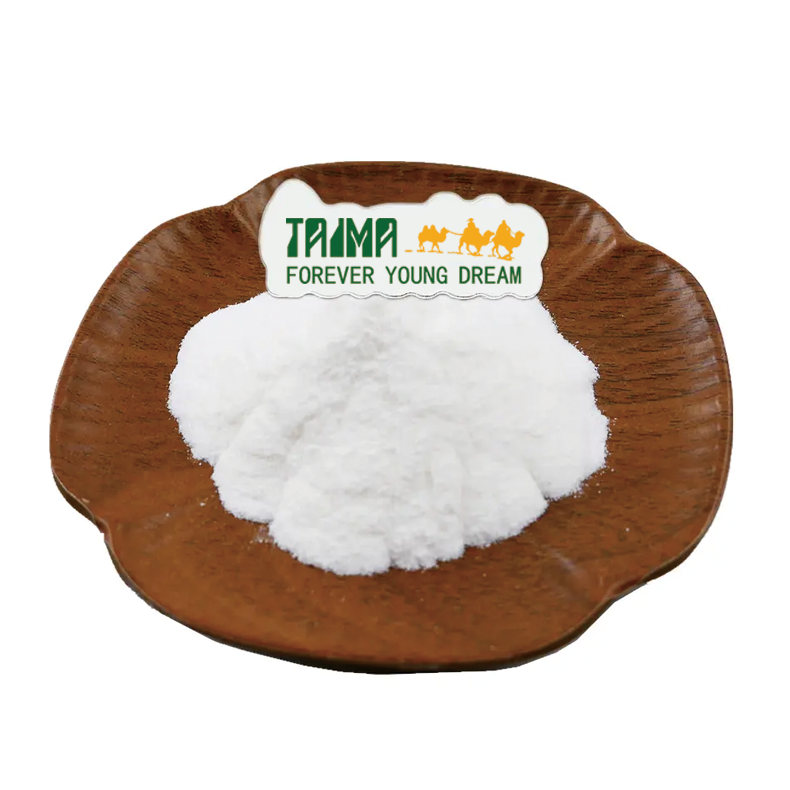
Stevia Powder (Rebaudioside A)

Product Detail
Basic Analysis
| Analysis | Description |
| Appearance | White fine powder |
| Total Steviol Glucosides(% dry basis) | ≥95 |
| Rebaudioside A % | ≥90 |
| Loss on Drying (%) | ≤4.00 |
| Ash (%) | ≤0.10 |
| PH (1% solution) | 5.5-7.0 |
| Specific Optical Rotation | -30º~-38º |
| Specific Absorbance | ≤0.05 |
| Lead (ppm) | ≤1 |
| Arsenic(ppm) | ≤1 |
| Cadmium(ppm) | ≤1 |
| Mercury(ppm) | ≤1 |
| Microbial Analysis | |
| Total Plate Count(cfu/g) | ≤1000 |
| Coliform(cfu/g) | Negative |
| Yeast&Mold(cfu/g) | Negative |
| Salmonella(cfu/g) | Negative |
| Staphylococcus(cfu/g) | Negative |
Application
Stevia consists of 2 main ingredients Stevioside and Rebaudioside A. It is used in the food and beverage industry as low-calorie natural sweetener. Specifically, Stevia (Rebaudioside-A 98%) is used as a sucrose replacement in all types of foods and beverages. It is often used in tea, soft drinks, alcoholic beverages, canned food, dried fruit, gum, and meat products.

Leave Your Message
Write your message here and send it to us